
Cosmic Matter
Solar system messengers
Une météorite est un fragment de matière extraterrestre qui a survécu à la traversée de l'atmosphère terrestre pour atteindre le sol. Avant cette traversée, l'objet est appelé météoroïde lorsqu'il se trouve dans l'espace, et météore pendant sa phase lumineuse dans l'atmosphère — ce que nous appelons communément une « étoile filante ».
La plupart des météorites proviennent de la ceinture d'astéroïdes, située entre Mars et Jupiter, où des millions de corps rocheux et métalliques orbitent autour du Soleil. Certaines, plus rares, proviennent de la Lune ou de Mars, éjectées par des impacts violents. On estime qu'environ 44 tonnes de matière extraterrestre tombent sur Terre chaque jour, mais la grande majorité se consume dans l'atmosphère ou tombe dans les océans.
À ce jour, le Meteoritical Bulletin Database — la référence internationale gérée par la Meteoritical Society — recense plus de 75 000 météorites nommées et classifiées.
Famous Meteorites
Click on a glowing dot to explore a meteorite
Three families, three stories
Meteorites are classified into three main categories, each revealing a different chapter in the history of the solar system.
The gravel paths
Chondrites and achondrites
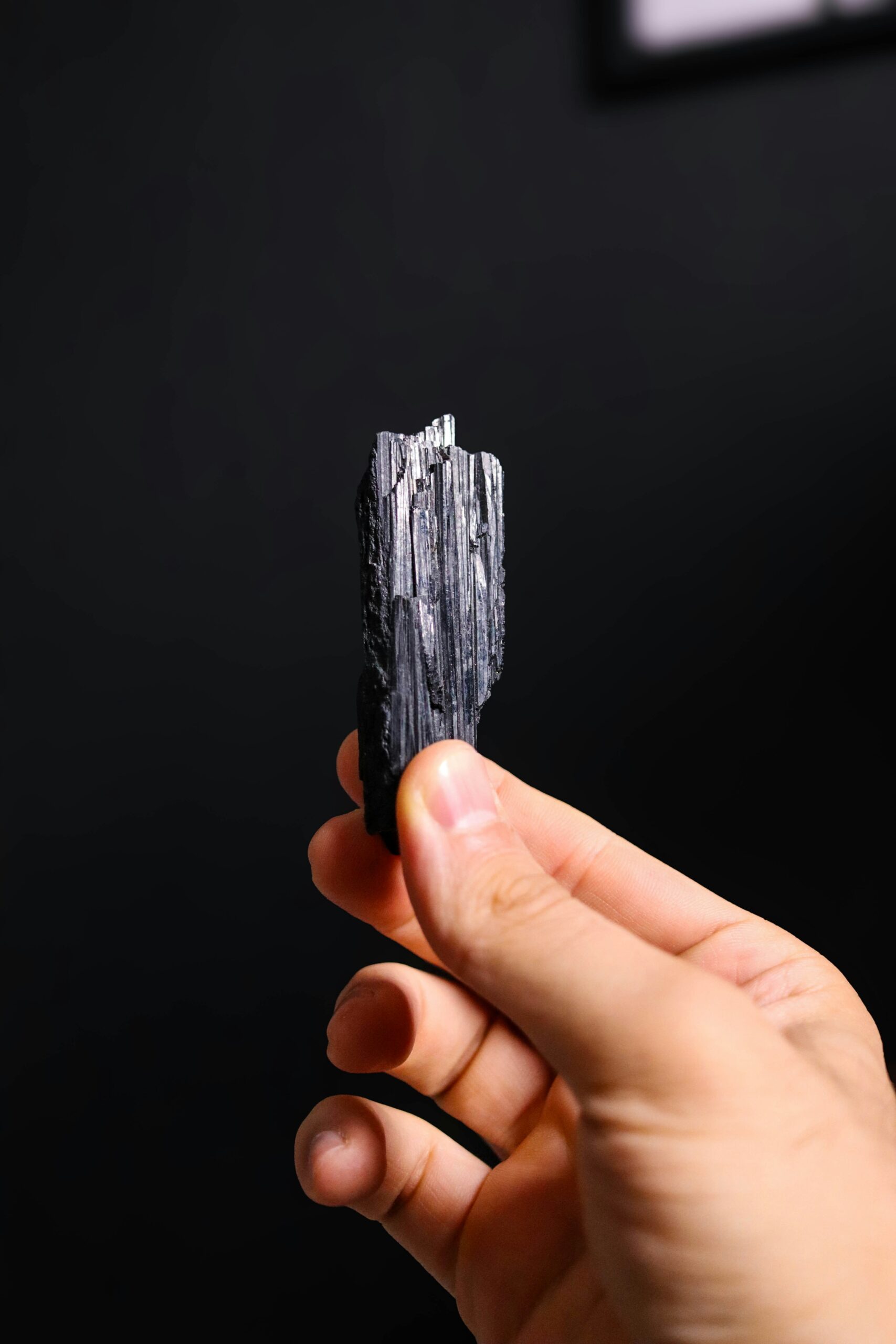
Representing about 94 % of observed falls, stony meteorites are the most common. Among these, chondrites are considered the most primitive materials in the solar system: they have hardly changed since the formation of the protoplanetary disc 4.56 billion years ago. They contain chondrules – tiny spheres of molten silicate – which formed in the primitive solar nebula. Achondrites, on the other hand, come from bodies that have undergone differentiation (core/mantle separation), such as Mars (shergottites) or the Moon (lunarites).
The metalworkers
Siderites
Composed mainly of iron and nickel, siderites originate from the core of differentiated asteroids. They only account for about 5 % of falls, but are over-represented in collections because their metallic appearance makes them easier to identify. Their most remarkable characteristic: Widmanstätten patterns, these geometric crystalline structures formed during cooling spanning hundreds of millions of years. The Gibeon meteorite (Namibia) and the Muonionalusta meteorite (Sweden, the oldest known meteorite to have impacted Earth, approximately 1 million years ago) are iconic examples.
Mixed doubles
Pallasites and mesosiderites
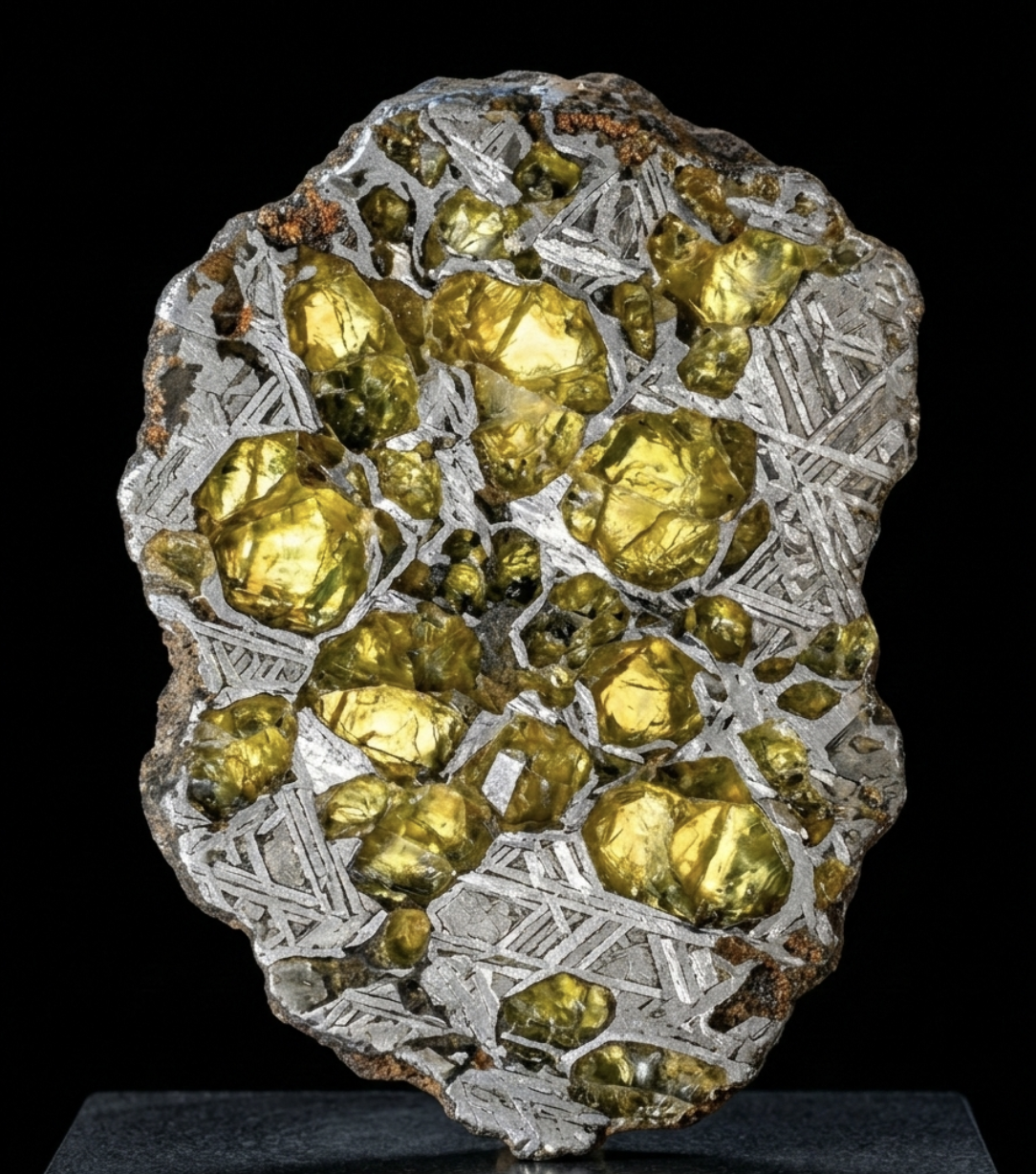
The rarest and often the most spectacular. Pallasites, with their olivine crystals embedded in iron-nickel, come from the transition zone between the core and mantle of an asteroid. Mesosiderites are complex mixtures of metal and silicate, likely formed during cataclysmic asteroid collisions. Together, they represent less than 1 % of known meteorites.
Methodology
HOW DO YOU AUTHENTICATE A METEORITE?
Identifying and classifying a meteorite is a rigorous scientific process. Here are the main steps:
Des Thin blades of rock are prepared and then observed under Polarising microscope. The texture, mineralogy and crystalline structure reveal the alien origin of the specimen and allow for an initial classification within the major meteorite families.
The Spectrometry — including X-ray fluorescence and electron microprobe — determine the precise elemental composition. The Oxygen isotope ratios are particularly discriminating: each body in the solar system possesses a unique isotopic signature.
The disintegration of radioactive isotopes allows the age of the meteorite to be determined. The most commonly used systems are the rubidium-strontium (Rb-Sr) and the Samarium-neodymium (Sm-Nd), capable of dating samples billions of years old.
The Meteoritical Society perform the final classification. Each meteorite receives a name — generally based on its Place of discovery — and a unique registration number in the international database of Meteoritical Bulletin.